
Human Capital Optimization & Workforce Architecture
Many organizations invest heavily in recruiting talent and training employees, yet still struggle with productivity, accountability, and performance consistency. This often happens when people’s systems are not properly structured to support organizational goals.
Without clear workforce planning, defined roles, effective performance management, and leadership development pathways, even highly capable teams can underperform.
Our Human Capital Optimization and Workforce Architecture service helps organizations design people systems that enable individuals and teams to perform at their best. We work with leadership to align workforce structure, performance expectations, and talent development with the organization’s strategic priorities.
Why People Systems Determine Performance
Talent alone is never enough. Organizations with skilled employees still struggle when their people systems are weak—when roles overlap, performance expectations are unclear, or leadership development happens by chance rather than design. These gaps don’t just frustrate employees; they erode accountability, slow down execution, and make it difficult to scale. We help you move beyond administrative HR to build strategic workforce systems that clarify expectations, develop future leaders, and create the conditions for people to perform at their best—consistently and sustainably.
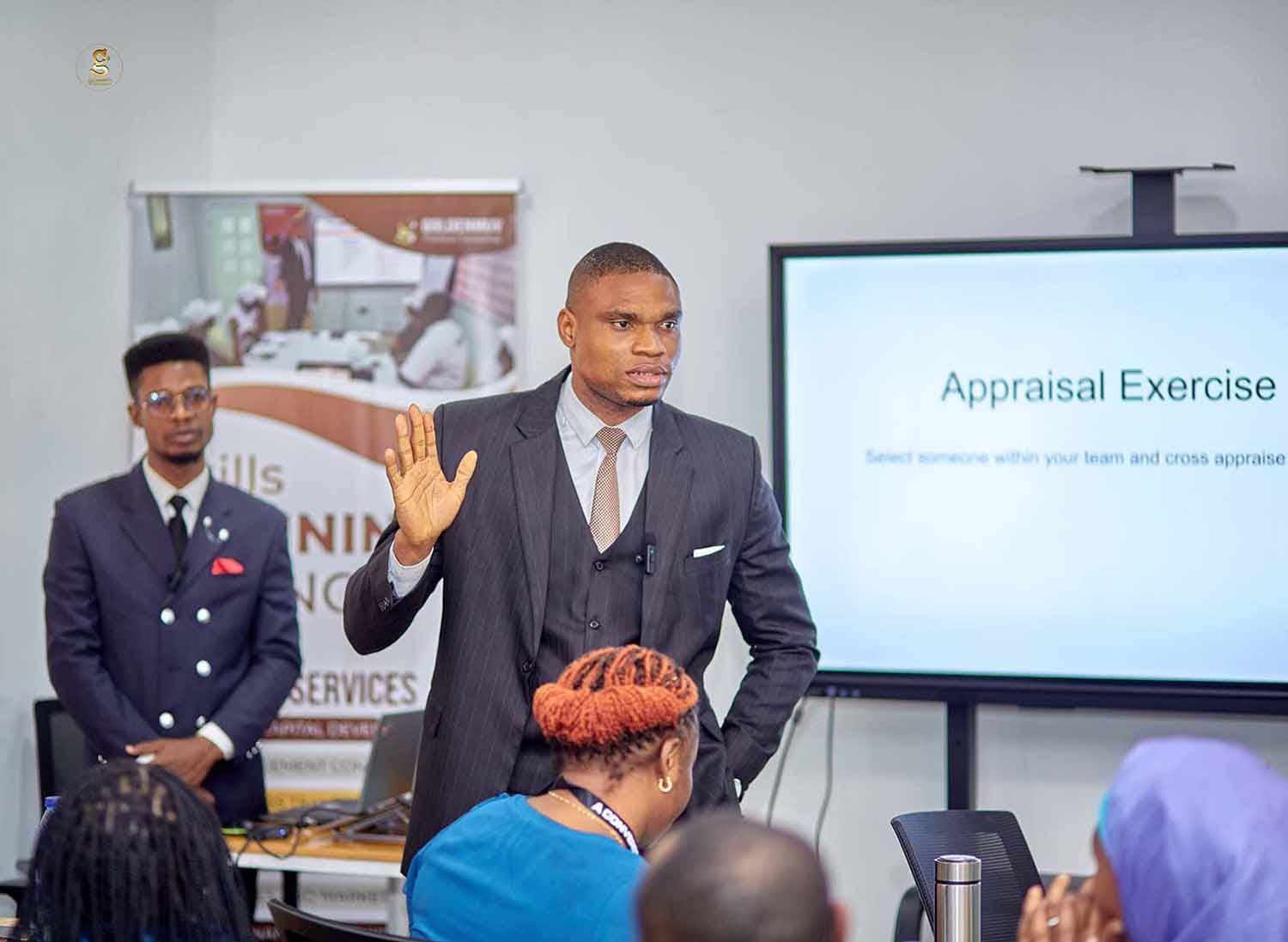
FOCUS AREAS
Workforce Planning and Job Architecture
Design of clear job roles, reporting structures, and workforce plans that ensure the right skills are positioned in the right roles across the organization.
Performance Management Systems
Development of structured performance frameworks that define expectations, track results, and link employee performance to organizational goals.
Talent Development and Succession Planning
Design of talent development pathways that prepare high potential employees for future leadership roles and ensure institutional continuity.
Staff Deployment and Workforce Optimization
Assessment of how human resources are currently distributed across the organization and realignment where necessary to improve productivity and efficiency.
Leadership Capability Development
Development of leadership capacity at executive, management, and supervisory levels to strengthen decision making, accountability, and team performance.
Employee Engagement and Culture Alignment
Assessment of workplace culture and employee motivation to strengthen commitment, improve retention, and align workforce behaviors with organizational values and strategic objectives.
Every organization’s people challenges are unique—some need to clarify overlapping roles, others need performance systems that actually drive accountability, and many need to build leadership pipelines for long-term stability. Our engagements are designed to address these specific gaps through practical, tailored interventions. Below are some of the ways we partner with organizations to optimize their workforce and strengthen their people systems.
-
Performance Management Framework Design
Development of structured systems that allow organizations to track employee performance and align it with strategic priorities.
-
Workforce Restructuring and Role Clarification
Redesign of workforce structures to remove role overlaps, reduce inefficiencies, and clarify reporting relationships.
-
Succession Planning and Leadership Pipeline Development
Support organizations in identifying and preparing future leaders to ensure continuity in key roles.
-
Human Resource System Strengthening
Evaluation and redesign of HR policies, systems, and processes to support modern workforce management.
-
Organizational Culture and Employee Engagement Reviews
Assessment of workplace culture, employee motivation, and leadership communication to strengthen workforce commitment and performance.
Organizations that strengthen their workforce systems don’t just manage people better—they unlock higher performance, deeper engagement, and greater long-term stability. Below are the tangible results our clients achieve.
Our Insight: Why Strong People Systems Are Critical for Nigerian Organizations
In many organizations across Nigeria, human resource management is still largely administrative rather than strategic. HR departments often focus on recruitment, payroll administration, and compliance activities, while deeper workforce planning and performance management systems remain underdeveloped.
This gap creates a number of challenges.
Organizations may recruit talented employees but fail to define clear performance expectations. In such environments, employees often work hard but lack clarity on how their efforts contribute to broader organizational goals.
Another common issue is the absence of structured succession planning. When senior leaders leave or retire, organizations struggle to replace them quickly because there is no leadership pipeline already prepared to assume those roles.
Rapid organizational growth also presents workforce challenges. As companies expand, roles become more complex and teams become larger. Without structured workforce architecture, reporting lines become confusing and coordination across departments becomes difficult.
Global management research consistently shows that organizations with structured performance management systems and strong leadership development frameworks achieve higher levels of productivity and employee retention.
Within the Nigerian context, organizations that invest in building strong people systems are better positioned to scale operations, attract high quality talent, and maintain institutional continuity even during periods of leadership transition or economic change.
By strengthening workforce architecture and leadership development systems, organizations can transform human capital into a sustainable strategic advantage.
-
Clearly defined roles and reporting relationships across departments
Every employee understands their specific responsibilities, who they report to, and how their position fits within the broader organizational structure. This clarity eliminates confusion, reduces overlap, and ensures that work flows smoothly between teams.
-
Stronger alignment between employee performance and organizational objectives
Individual goals and performance expectations are directly connected to the organization's strategic priorities. Employees see clearly how their daily efforts contribute to larger outcomes, which increases focus and motivation.
-
Improved productivity and accountability among teams
With clear expectations and structured performance systems in place, teams take greater ownership of their results. Work gets done more efficiently, and performance gaps are identified and addressed before they become persistent problems.
-
Development of internal leadership pipelines for critical roles
High-potential employees are systematically identified and prepared for future leadership responsibilities. This ensures that when key positions become vacant, qualified internal candidates are ready to step up without disruption.
-
Greater employee engagement and workforce stability
When people understand their roles, see pathways for growth, and feel connected to organizational purpose, they are more likely to stay and contribute fully. This reduces turnover costs and builds a more experienced, committed workforce over time.